
 Русский
  English
  Deutsch
  Español
  العربية
  中文
中文  Türkçe
  Français
  Italiano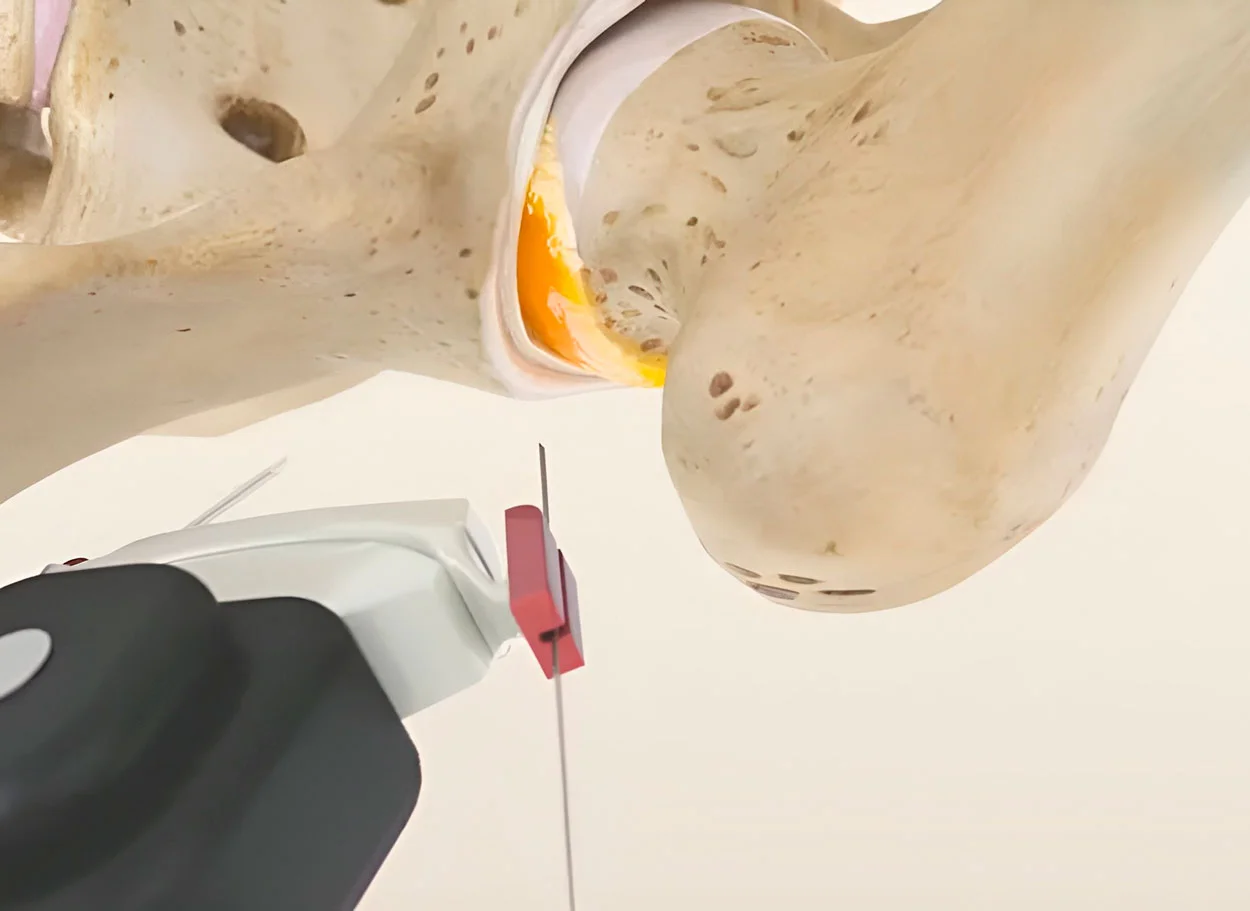
What is a labral tear?
The acetabular labrum is a cartilage ring surrounding the acetabulum of the hip joint. It increases the acetabulum depth by 22%, provides stability, cushioning, and joint sealing, retaining synovial fluid inside.
Labral tear is one of the most common causes of groin pain in young and active people. According to studies, labral tears are found in 22-55% of patients with hip pain. Without treatment, a damaged labrum leads to joint instability and accelerated osteoarthritis development.
Causes of injury:
- Femoroacetabular impingement (FAI) — main cause, bony prominences traumatize the labrum
- Trauma — sports injury, fall, hip dislocation
- Dysplasia — shallow acetabulum creates labrum overload
- Degeneration — age-related wear of the cartilage ring
- Overload — sports with sharp turns (soccer, hockey, dancing)
Facts about labral tears
- ICD-10: S73.1
- Frequency: 22-55% of patients with hip pain
- Age: most common 20-45 years
- Location: 90% — anterior-superior quadrant
- Complication: accelerated Hip Osteoarthritis (Coxarthrosis)
Symptoms of labral tear
Typical symptoms
- Groin pain worsening with activity
- Sensation of "clicking" or "catching"
- Limited hip rotation
- Pain with prolonged sitting
- Discomfort when climbing stairs
Diagnostic tests
- FADIR test (flexion + adduction + internal rotation)
- Pain with maximum hip flexion
- Positive "C-sign" — hand cups the hip
- MRI with contrast — gold standard for diagnosis
Consequences without Treatment
- Hip Joint Instability
- Damage to the Acetabular Cartilage
- Accelerated Development of Hip Osteoarthritis (Coxarthrosis)
- Chronic Pain and Activity Limitation
How regenerative treatment treats labral tears
MRI Diagnosis
MRI of the hip joint (preferably with contrast — MR arthrography) is analyzed to determine the location, type, and size of the labral tear. The condition of the cartilage and presence of associated impingement are assessed.
Obtaining Concentrates
From blood — CGF with cartilage growth factors. From adipose tissue — MFAT with mesenchymal stem cells capable of differentiating into chondrocytes and restoring labral cartilage tissue.
Targeted Injection
Under Ultrasound guidance ultrasound guidance, concentrates are injected directly into the damaged labrum and joint cavity. Areas of damaged acetabular and femoral head cartilage are treated simultaneously.
Labrum Regeneration
Stem cells differentiate into chondrocytes and restore labrum structure. Anti-inflammatory factors reduce swelling and pain. Result — restoration of joint stability and function without arthroscopy.
Arthroscopy vs regenerative treatment
| Criterion | Arthroscopy (repair/debridement) | Regenerative treatment |
|---|---|---|
| Principle | Surgical repair or partial labrum removal | Biological labrum regeneration |
| Anesthesia | General anesthesia | No anesthesia |
| Hospitalization | 1-2 days | None — home same day |
| Rehabilitation | 3-6 months, crutches 4-6 weeks | Several days |
| Labrum Preserved? | Repair — yes, debridement — partially removed | ✅ Yes — regenerated |
Regenerative method Advantages
A broad range of indications
Regenerative methods are used for many orthopaedic and spinal conditions. Some cases still call for surgery.
No anesthesia or incisions
Outpatient treatment via 0.3-1.5 mm puncture. No general anesthesia or hospitalization.
No age restrictions
Regeneration at any age. Safe for chronic conditions and anesthesia intolerance.
Rapid improvement
Concentrates have analgesic and anti-inflammatory properties. Relief within days.
Multiple zones at once
Simultaneous treatment of multiple discs or joints in one procedure.
Home the same day
No crutches, braces or rehabilitation needed. MRI follow-up at 8-16 weeks.
Regenerative treatment Technology

Navigation system
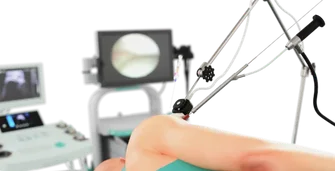
Intraoperative robotic navigation system. Provides precise access to deep structures with 1 mm and 1 degree accuracy.
Ultrasound guidance
Device for intervention under sonographic control. Eliminates open surgeries with real-time visual monitoring.
Frequently Asked Questions about labral tear treatment
Clinic and method matching — free of charge
Describe your case and attach your MRI report. We will identify clinics that use the relevant methods and forward your request to them. No obligation; we reply within two working days.
Send a request