
 Русский
  English
  Deutsch
  Español
  العربية
  中文
中文  Türkçe
  Français
  Italiano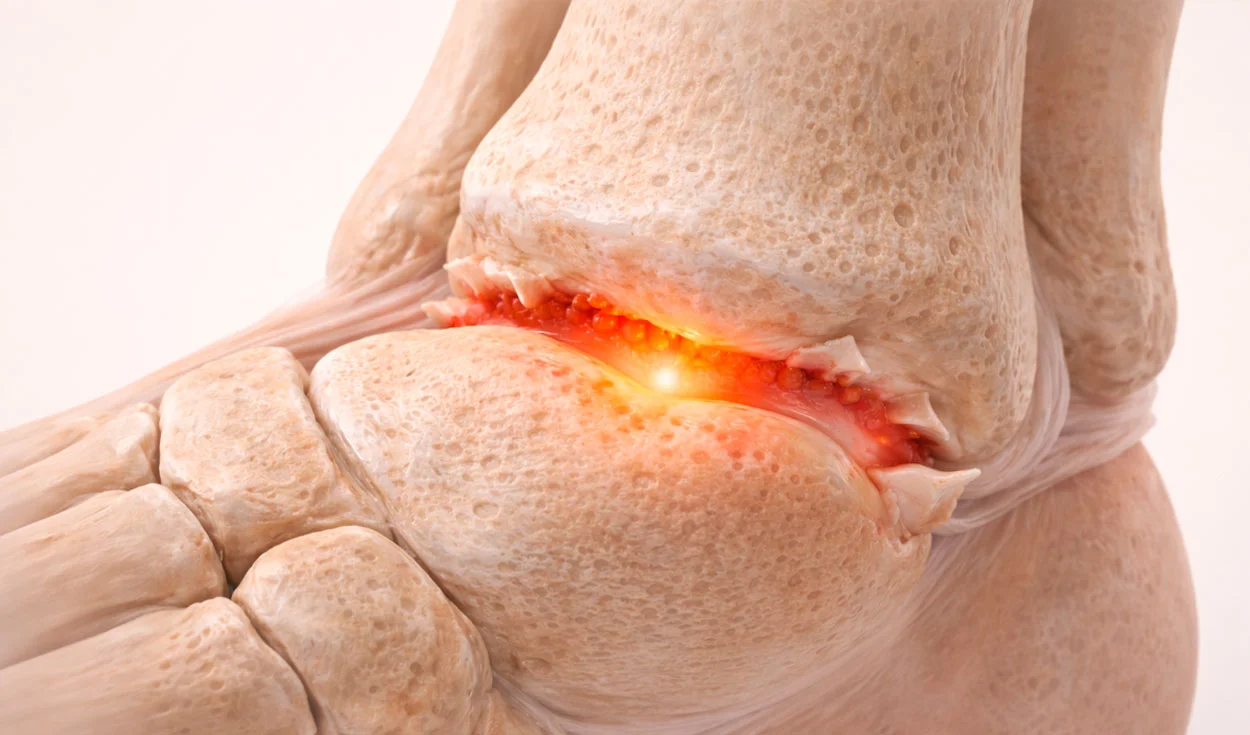
What is ankle osteoarthritis?
Crurarthrosis is a degenerative disease of the ankle joint with destruction of the cartilage coating. Unlike knee and hip osteoarthritis, it is post-traumatic in 80% of cases — it develops after ankle fractures and ligament injuries.
Surgical treatment includes arthrodesis (joint fusion) or joint replacement. Arthrodesis completely eliminates mobility, while the ankle prosthesis is less reliable than those for the knee or hip.
Causes:
- Post-traumatic (80%) — after fractures, dislocations
- Chronic instability — recurrent subluxations
- Osteochondral lesion — cartilage defect of the talus
- Rheumatoid Arthritis
- Foot deformity — flatfoot, varus
Symptoms:
- Pain when walking, especially on uneven surfaces
- Joint swelling by the end of the day
- Morning stiffness
- Limited dorsiflexion of the foot
- Limping during exacerbations
Facts about crurarthrosis
- ICD-10: M19.07
- Cause: 80% post-traumatic
- Age: younger than with gonarthrosis
- Arthrodesis: loss of mobility
- Prosthesis: less reliable than knee
How regenerative treatment treats crurarthrosis
MRI diagnostics
MRI determines the stage of osteoarthritis, osteochondral lesions, and ligament condition. Feasibility of regenerative treatment is assessed.
Obtaining concentrates
CGF — chondrogenic and anti-inflammatory factors. MFAT — stem cells for cartilage and ligament regeneration.
Intra-articular injection
Under Ultrasound guidance navigation, concentrates are injected into the joint cavity, osteochondral defects, and damaged ligaments.
Cartilage regeneration
Stem cells restore the cartilage coating and ligaments. Result — pain reduction, improved mobility, postponement of arthrodesis.
Regenerative method Advantages
A broad range of indications
Regenerative methods are used for many orthopaedic and spinal conditions. Some cases still call for surgery.
No anesthesia or incisions
Outpatient treatment via 0.3-1.5 mm puncture. No general anesthesia or hospitalization.
No age restrictions
Regeneration at any age. Safe for chronic conditions and anesthesia intolerance.
Rapid improvement
Concentrates have analgesic and anti-inflammatory properties. Relief within days.
Multiple zones at once
Simultaneous treatment of multiple discs or joints in one procedure.
Home the same day
No crutches, braces or rehabilitation needed. MRI follow-up at 8-16 weeks.
Regenerative treatment Technology

Navigation system
Intraoperative robotic navigation system. Provides precise access to deep structures with 1 mm and 1 degree accuracy.
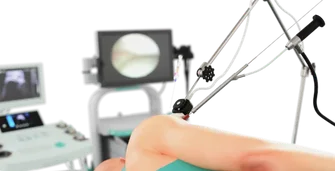
Ultrasound guidance
Device for intervention under sonographic control. Eliminates open surgeries with real-time visual monitoring.
Frequently Asked Questions about Treatment of Ankle Osteoarthritis
Clinic and method matching — free of charge
Describe your case and attach your MRI report. We will identify clinics that use the relevant methods and forward your request to them. No obligation; we reply within two working days.
Send a request