
 Русский
  English
  Deutsch
  Español
  العربية
  中文
中文  Türkçe
  Français
  Italiano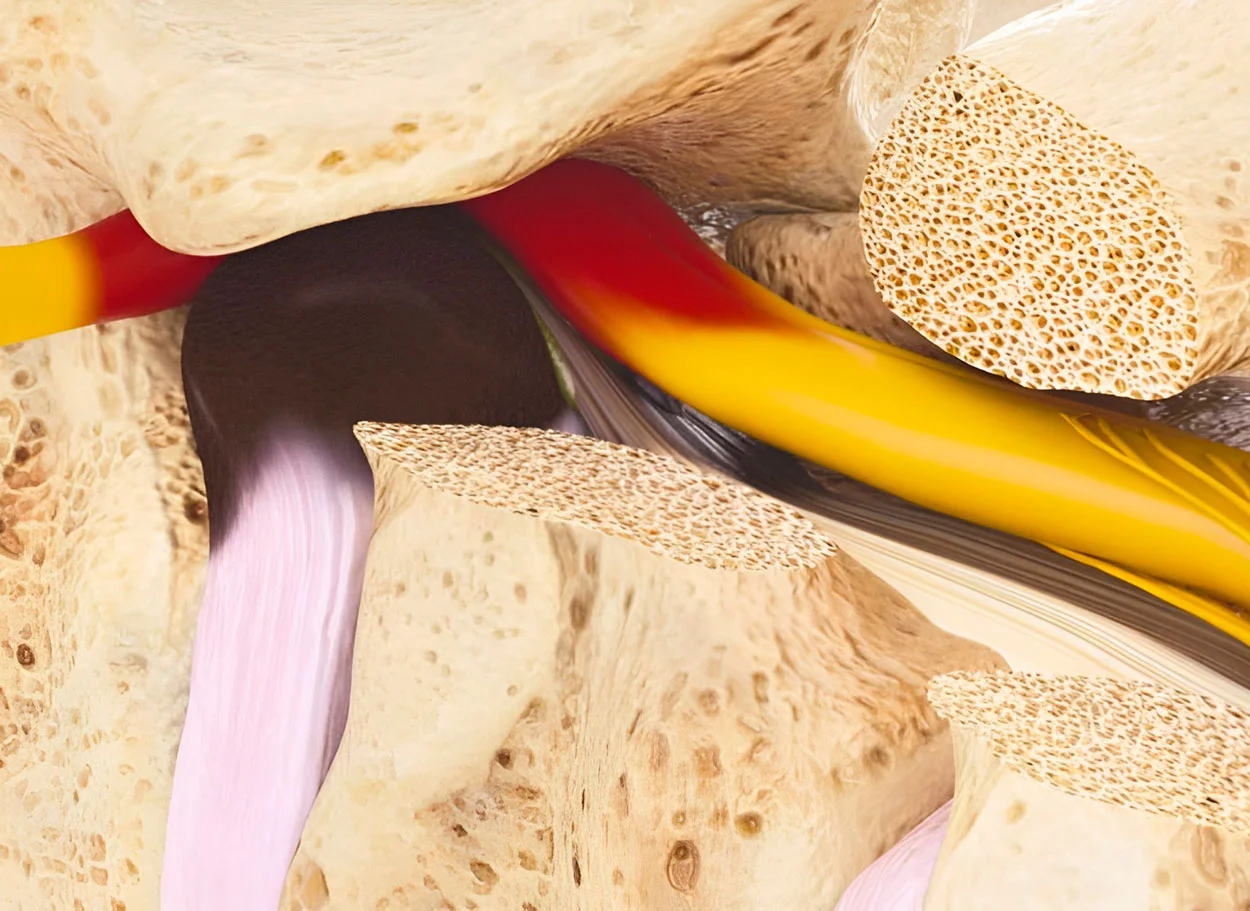
What is osteochondrosis?
Osteochondrosis (degenerative disc disease, DDD) is a complex of dystrophic changes in intervertebral discs, in which the disc loses moisture, elasticity, and height, leading to instability of the spinal segment, pain syndrome, and neurological disorders.
This is the most common spine disorder. According to various data, degenerative disc changes are found in 40% of people by age 30 and in 90% by age 50-55. Osteochondrosis is the primary cause of herniated discs, protrusions, and spinal stenosis.
Spinal regions:
- Cervical osteochondrosis (C3-C7) — headaches, dizziness, neck and arm pain
- Thoracic osteochondrosis (Th1-Th12) — intercostal neuralgia, chest pain
- Lumbar osteochondrosis (L1-S1) — low back pain, sciatica, leg pain
Stages of disc degeneration:
- Dehydration — loss of moisture in the nucleus pulposus, reduction in disc height
- Instability — weakening of the annulus fibrosus, pathological mobility
- Protrusion/herniation — bulging or extrusion of disc contents
- Fibrosis — replacement of disc tissues with scar tissue, ankylosis
Facts about osteochondrosis
- ICD-10: M42
- Prevalence: 90% of people over 50 years
- #1 cause: back pain in working-age population
- Disability: 2nd place among all diseases
- Complications: herniations, stenosis, radiculopathy
Causes of osteochondrosis
The intervertebral disc is the only structure in the human body that lacks its own blood vessels. Disc nutrition occurs exclusively through diffusion — the seepage of nutrients from surrounding tissues during spinal movement. Any factor disrupting this process triggers degeneration.
Main Causes
- Sedentary lifestyle — disrupts diffusion of nutrients into the disc
- Age-related changes — natural loss of water and elasticity
- Excessive loads — microtrauma to the annulus fibrosus during heavy labor
- Poor posture — uneven load distribution on discs
- Spinal injuries — accelerate degeneration of damaged segments
Risk Factors
- Genetics — hereditary predisposition to early degeneration
- Smoking — impairs microcirculation around discs
- Obesity — increased load on the lumbar spine
- Vibration — occupational hazard (drivers, construction workers)
- Metabolic disorders — diabetes mellitus, hypothyroidism
Why Pills Don't Help
- Painkillers (NSAIDs) mask pain but do not restore the disc
- Chondroprotectors do not reach the disc due to lack of blood supply
- Physical therapy improves nutrition but cannot regenerate a destroyed disc
- Regenerative treatment delivers stem cells and growth factors directly into the disc
Symptoms of Osteochondrosis
Cervical Spine
- Pain and stiffness in the neck
- Headaches (cervicogenic)
- Dizziness, tinnitus
- Pain and numbness in the arms
- Impaired concentration
- Vertebral artery syndrome
Lumbar Spine
- Constant aching pain in the lower back
- Acute lumbago
- Leg pain when walking
- Stiffness after sleep
- Muscle tension (defensive spasm)
- Sensory disturbances
Complications
- Herniated intervertebral discs
- Spinal Stenosis
- Spondylolisthesis
- Radiculopathy (radicular syndrome)
- Myelopathy (cervical)
- Organ dysfunction
How Regenerative Methods Treat Osteochondrosis
Comprehensive Diagnostics
Full spine MRI is analyzed by the Navigation system system. All damaged discs are identified, the degree of degeneration of each, presence of herniations, protrusions, and stenosis. An individual treatment plan is developed.
Obtaining Concentrates
CGF — concentrate of growth factors stimulating regeneration — is obtained from the patient's blood. MFAT with mesenchymal stem cells capable of restoring disc cartilage tissue is obtained from adipose tissue.
Intradiscal Injection
Under 3D navigation control, concentrates are injected directly into each damaged disc — into the nucleus pulposus and annulus fibrosus. Paravertebral tissues and facet joints are also treated.
Disc Regeneration
Stem cells begin to restore disc structure: rehydration of the nucleus pulposus, strengthening of the annulus fibrosus, restoration of disc height. The process takes 3-6 months with visible improvement on follow-up MRI.
Why Regenerative Treatment Is Effective for Osteochondrosis
Osteochondrosis is the only disease in which the damaged organ (disc) lacks blood supply. This is why pills, intramuscular injections, and even intravenous drugs do not reach the disc. Regenerative treatment solves this problem directly — regenerative concentrates are injected directly into the disc.
What Happens Inside the Disc After regenerative treatment:
- Mesenchymal stem cells (MFAT) differentiate into chondrocyte-like cells — the main "builders" of the disc's cartilage tissue
- Growth factors (CGF) stimulate the production of proteoglycans and type II collagen — the main components of the disc matrix
- Rehydration — restoration of the nucleus pulposus's ability to retain water, which increases disc height
- Strengthening of the annulus fibrosus — healing of micro-cracks, prevention of herniations
- Anti-inflammatory effect — reduction of chronic inflammation that accelerates degeneration
Key advantage: Regenerative treatment is a method that targets the cause of osteochondrosis (disc degeneration), not its consequences (pain, herniations, stenosis). At the same time, all damaged discs — from the cervical to the lumbar spine — can be treated in one procedure.
Regenerative treatment for Osteochondrosis
- Intradiscal injection — directly into the damaged disc
- All discs at once — from neck to lumbar
- Rehydration — restoration of disc height
- Herniation prevention — strengthening of the annulus fibrosus
- Without general anesthesia — local anesthesia
- Any age — no restrictions
Regenerative method Advantages
A broad range of indications
Regenerative methods are used for many orthopaedic and spinal conditions. Some cases still call for surgery.
No anesthesia or incisions
Outpatient treatment via 0.3-1.5 mm puncture. No general anesthesia or hospitalization.
No age restrictions
Regeneration at any age. Safe for chronic conditions and anesthesia intolerance.
Rapid improvement
Concentrates have analgesic and anti-inflammatory properties. Relief within days.
Multiple zones at once
Simultaneous treatment of multiple discs or joints in one procedure.
Home the same day
No crutches, braces or rehabilitation needed. MRI follow-up at 8-16 weeks.
Regenerative treatment Technology

Navigation system
Intraoperative robotic navigation system. Provides precise access to deep structures with 1 mm and 1 degree accuracy.
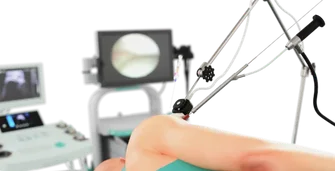
Ultrasound guidance
Device for intervention under sonographic control. Eliminates open surgeries with real-time visual monitoring.
Frequently Asked Questions About Osteochondrosis Treatment

Clinic and method matching — free of charge
Describe your case and attach your MRI report. We will identify clinics that use the relevant methods and forward your request to them. No obligation; we reply within two working days.
Send a request