
 Русский
 English
 Deutsch
 Español
 العربية
 中文
 Türkçe
 Français
 Italiano
Treatment in Germany: what we do

Choosing the clinic and the method
We go through your case and suggest clinics that use regenerative methods without surgery.
Compare treatment methods →
Second opinion on your MRI
We forward your images and reports to clinics — free of charge, with an answer within 24 hours.
Request a second opinion →
Cost estimate
We request offers from several clinics: each sets its own price, and you compare the conditions.
See prices →
Documents, visa, travel
Translation of documents, an invitation for a medical visa, an interpreter and a transfer on arrival.
How the trip works →Who may benefit from regenerative treatment

Those Offered Surgery
A second opinion and a comparison of options — including surgery
Compare treatment methods →
Those not helped by conservative treatment
When exercise therapy and medication have not helped for several months
Conditions →
Athletes
Diagnostics and a treatment plan after an injury, with realistic return-to-sport timelines
Sports medicine →
Elderly Patients
Options under local anaesthesia if general anaesthesia is undesirable; the clinic physician decides
Treatment preparation →What is Regenerative Treatment?
These methods may reduce pain and inflammation, but the evidence is still limited: there are few studies, and restoration of cartilage or discs has not been shown. Whether a method suits you — and whether injections, exercise therapy or surgery is better — is decided by the clinic physician based on your images and an examination.
-
Where regenerative methods are used
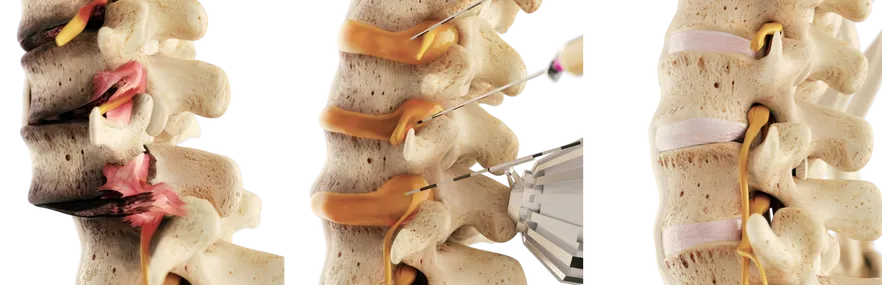
- SpineOsteoarthritis and osteochondrosis, intervertebral disc herniations and protrusions, stenoses, etc.
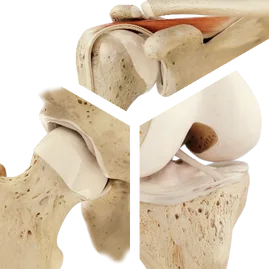
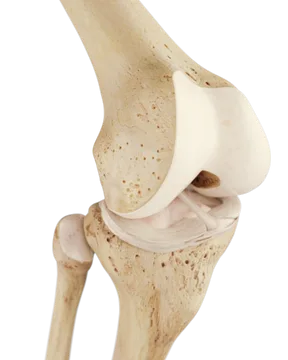
- Knee JointSynovitis, osteoarthritis, cruciate ligament tears, etc.
- Wrist JointDegenerative osteoarthritis, etc.
- Hip JointHip osteoarthritis (coxarthrosis), necroses, etc.
- Shoulder and Elbow JointsBursitis, tendinitis, etc.
Reduce pain
Improve mobility and function
Postpone surgery if the physician considers it reasonable
Keep up your usual activities
What to know about regenerative treatment
-
Minimally invasive approach
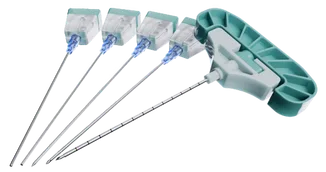
The product is injected through a needle, usually under ultrasound or X-ray guidance. No large incisions are needed, the procedure is mostly outpatient, and the physician advises on activity afterwards.
-
The patient’s own tissue
Products are prepared from the patient’s own blood, bone marrow or fat, so allergy and rejection are rare. But there are risks: pain and swelling after the injection, bruising at the harvest site and, rarely, infection.
-
Realistic expectations
These products mainly reduce inflammation and pain; how much the tissue recovers cannot be predicted. If there is an effect, it develops over 6–12 weeks. Whether surgery can be postponed is decided by the clinic physician after reviewing your images and examining you.
Which products clinics use
Products made from the patient’s own tissue fall into two groups:
-
Blood concentrates: PRP, CGF
Plasma with a high concentration of platelets and growth factors, prepared from the patient’s venous blood by centrifugation in 20–30 minutes.
- Knee osteoarthritis: moderate evidence of pain reduction
- Tennis elbow and tendinopathies: mixed results
- Usually 1–3 injections
PRP does not grow new cartilage; the effect usually lasts months.
-
Cell-based products: BMAC, MFAT
Bone marrow concentrate (BMAC) and microfragmented fat (MFAT) are harvested and injected in a single procedure under local anaesthesia.
- Studies are small and results vary between patients
- Restoration of cartilage or discs has not been shown
- Enzymatically isolated cells (SVF) are regulated as medicinal products in the EU
The clinic physician decides whether the method is suitable and explains the risks and alternatives.
How a procedure at the clinic usually works
- 01
Examination and images
The clinic physician reviews your MRI or X-ray, examines you and explains the treatment options and what to expect from them.
Read more - 02
Preparing the product
Blood is taken from a vein; bone marrow or fat is harvested through a needle under local anaesthesia. The product is prepared on the day of the procedure.
Read more - 03
Guided injection
The product is injected through a needle under ultrasound or X-ray guidance so that it reaches the target structure.
Read more - 04
After the procedure
You can usually return to your hotel the same day. Pain and swelling are possible for a few days; the physician advises on activity and exercises, with a follow-up after 2–3 months.
Read more
Areas of Regenerative Treatment Application


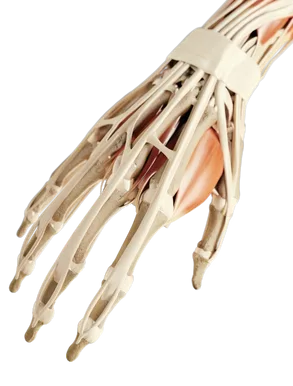

Clinics and Centers of Regenerative Medicine
The directory lists verified regenerative medicine clinics in Germany. We match a clinic to your case and forward your materials to it.
Comparison of Treatment Methods
How treatments for joints and the spine differ — without promises, based on the evidence
| Criterion | Joint replacement | Arthroscopy | PRP | Cell-based methods (BMAC, MFAT) |
|---|---|---|---|---|
| Anaesthesia | General or spinal | General or spinal | Local or none | Local |
| Hospital stay | About a week | Outpatient or 1 day | Outpatient | Outpatient |
| Recovery | Rehabilitation 3–4 weeks, full recovery months | Weeks | A few days | A few days to weeks |
| What it does | Replaces the worn joint | Removes or repairs damaged tissue | May reduce pain | May reduce pain; does not restore cartilage |
| Evidence | Strong for advanced osteoarthritis | Limited for age-related meniscus tears | Moderate for knee osteoarthritis | Limited, small studies |
| How long the effect lasts | Most implants 20–25 years or longer | Varies | Usually months | Not well established |
| Criterion | Surgery (microdiscectomy, decompression) | Epidural or nerve root injection | Exercise therapy | PRP and cell-based methods |
|---|---|---|---|---|
| Anaesthesia | General | Local | — | Local |
| Hospital stay | 1–3 days | Outpatient | Outpatient | Outpatient |
| When used | Persistent leg pain with nerve compression, weakness | Flare-up of radicular pain | First-line for most back pain | Individually, in some clinics |
| Evidence | Good with the right indication | Relief for weeks to months | Good | Limited |
| Effect | Leg pain often eases quickly | Temporary | Builds up over weeks | Unpredictable |
| Criterion | Surgical lift | Fillers, botulinum toxin | Laser | PRP, fat grafting |
|---|---|---|---|---|
| Anaesthesia | General or sedation | None or local | Local | Local |
| Recovery | 2–4 weeks | 1–3 days | 3–7 days | A few days |
| How long it lasts | Years | Months | Months | Varies, repeat sessions often needed |
| Risks | As with any operation | Bruising, rarely vascular complications | Burns, pigmentation | Bruising, swelling, uneven result |
| Criterion | FUE transplant | Minoxidil, finasteride | PRP |
|---|---|---|---|
| Anaesthesia | Local | — | Local or none |
| How it works | Moves your own follicles | Medication | Growth factors from blood |
| Side effects | Scarring, swelling | Scalp irritation; hormonal effects with finasteride | Pain during injections |
| Evidence | Good | Good, first-line treatment | Moderate, repeat courses needed |
| When results show | 6–12 months | 3–6 months | 3–6 months |
How clinics inject precisely

X-ray and navigation
For spinal injections, many clinics use X-ray guidance (C-arm), and some use navigation systems, so that the needle reaches exactly the right structure. The equipment depends on the clinic.
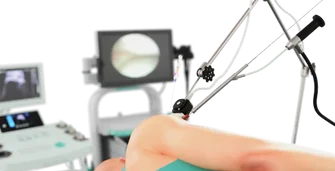
Ultrasound guidance
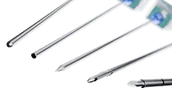
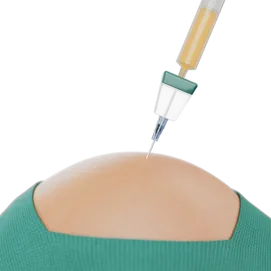
Injections into joints, tendons and ligaments are often given under ultrasound: the physician sees the needle and the target in real time.

About the method: what to know
The clinic physician decides on suitability based on your MRI and an examination; the method is not right for everyone.
Procedures are usually outpatient, through a needle, without large incisions.
Local anaesthesia is usually used — an option if general anaesthesia is undesirable. Contraindications include active cancer, infections and some blood disorders.
There is no strict age limit: the physician decides based on tissue condition and general health. With age, the effect may be more modest.
If there is an effect, it develops over 6–12 weeks and is often partial; restoration of cartilage or discs has not been shown.
Sometimes several areas are treated in one session — the physician decides.
Pain and swelling are possible for 1–3 days after the procedure; the physician advises on activity and exercises.
Results are assessed by how you feel and an examination after 2–3 months; follow-up imaging only if needed.
Partnership
We arrange diagnostics and treatment for your clients in German clinics: choosing the clinic, a contract signed directly with it, visa documents, translation of medical records and an interpreter at appointments. We are open to transparent cooperation.
Submit RequestHow we organise treatment
Request
Describe your problem and attach your images via the website form or WhatsApp
Case review
A coordinator replies within 24 hours and clarifies the details
Request to clinics
We send your case to several partner clinics; a physician’s opinion follows in 1–3 working days
Compare and choose
Each clinic quotes its own conditions and price — you choose the option
Trip arrangements
Appointment, visa invitation, interpreter, transfers and accommodation; treatment is provided by the clinic