 Русский
  English
  Deutsch
  Español
  العربية
  中文
中文  Türkçe
  Français
  Italiano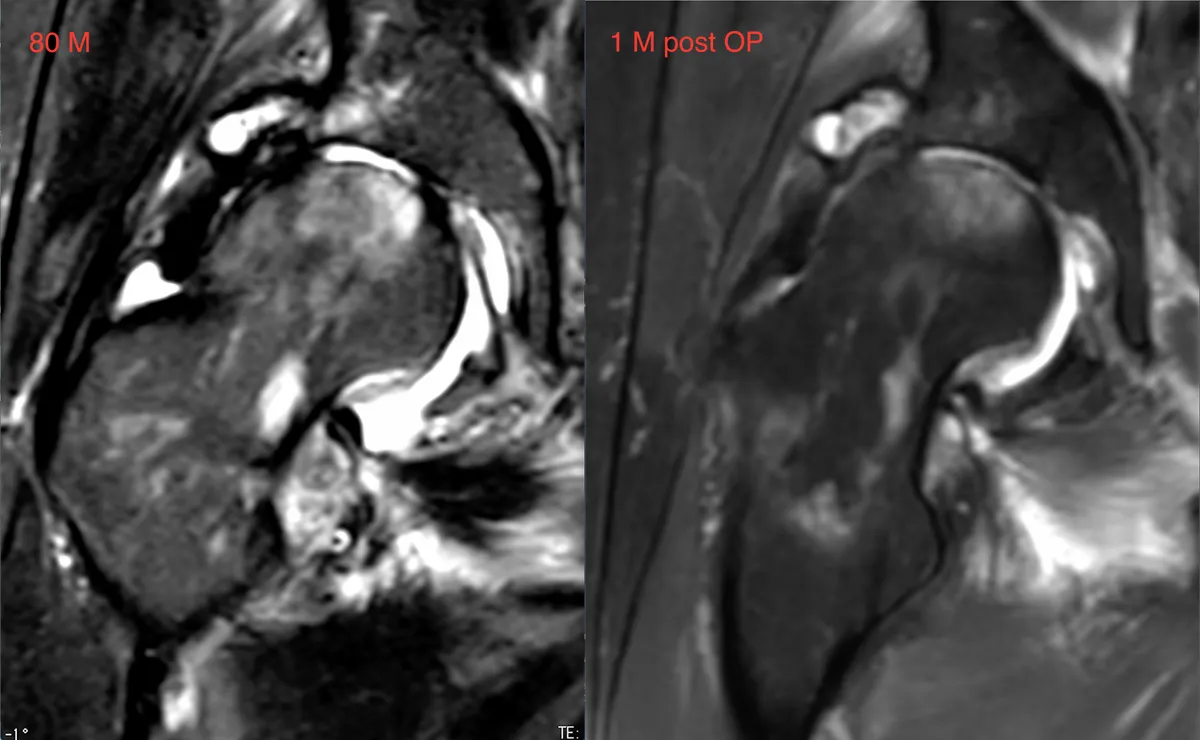
Hip Joint Diseases
Coxarthrosis
Hip joint arthrosis — cartilage degeneration with pain, stiffness, and limited mobility. Most common cause of hip replacement.
Learn More About Treatment →Avascular Necrosis
Death of bone tissue in the femoral head due to impaired blood supply. Progressive joint destruction.
Learn More About Treatment →Labral Tear
Damage to the acetabular labrum. Pain in the groin, clicking, limited range of motion.
Learn More About Treatment →Hip Impingement
Femoroacetabular impingement — abnormal contact between the femoral head and acetabulum. Pain during flexion.
Learn More About Treatment →Hip Bursitis
Inflammation of the bursa around the hip joint. Pain on the outer thigh, especially when lying on affected side.
Learn More About Treatment →Perthes Disease
Avascular necrosis of the femoral head in children. Disrupted blood supply leads to joint deformation.
Learn More About Treatment →Also Treated Using a regenerative method
- Piriformis syndrome
- Snapping hip syndrome
- Gluteal tendinopathy
- Ischial bursitis
- Femoral neck stress fracture
- Hip dysplasia
Send MRI images for free treatment feasibility assessment.
Why regenerative treatment Instead of Joint Replacement
Your Own Joint
Preservation of the patient's own joint instead of replacement with an artificial one. Effect on cartilage tissue.
Without General Anesthesia
Procedure under local anesthesia. Especially important for elderly patients with comorbidities.
Both Joints at Once
Both hip joints can be treated in one procedure — impossible with joint replacement.
Fast Recovery
Home the same day. Full walking immediately. Rehabilitation — days, not months.
Regenerative method Advantages
A broad range of indications
Regenerative methods are used for many orthopaedic and spinal conditions. Some cases still call for surgery.
No anesthesia or incisions
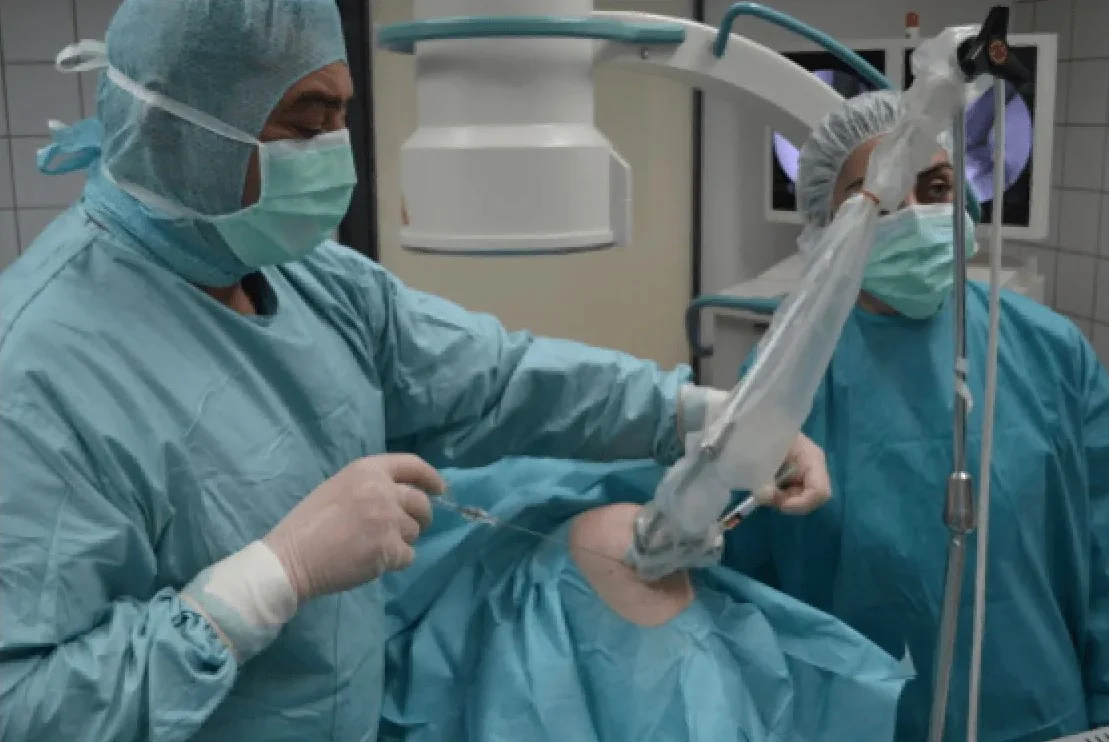
Outpatient treatment via 0.3-1.5 mm puncture. No general anesthesia or hospitalization.
No age restrictions
Regeneration at any age. Safe for chronic conditions and anesthesia intolerance.
Rapid improvement
Concentrates have analgesic and anti-inflammatory properties. Relief within days.
Multiple zones at once
Simultaneous treatment of multiple discs or joints in one procedure.
Home the same day
No crutches, braces or rehabilitation needed. MRI follow-up at 8-16 weeks.
Regenerative treatment Technology

Navigation system
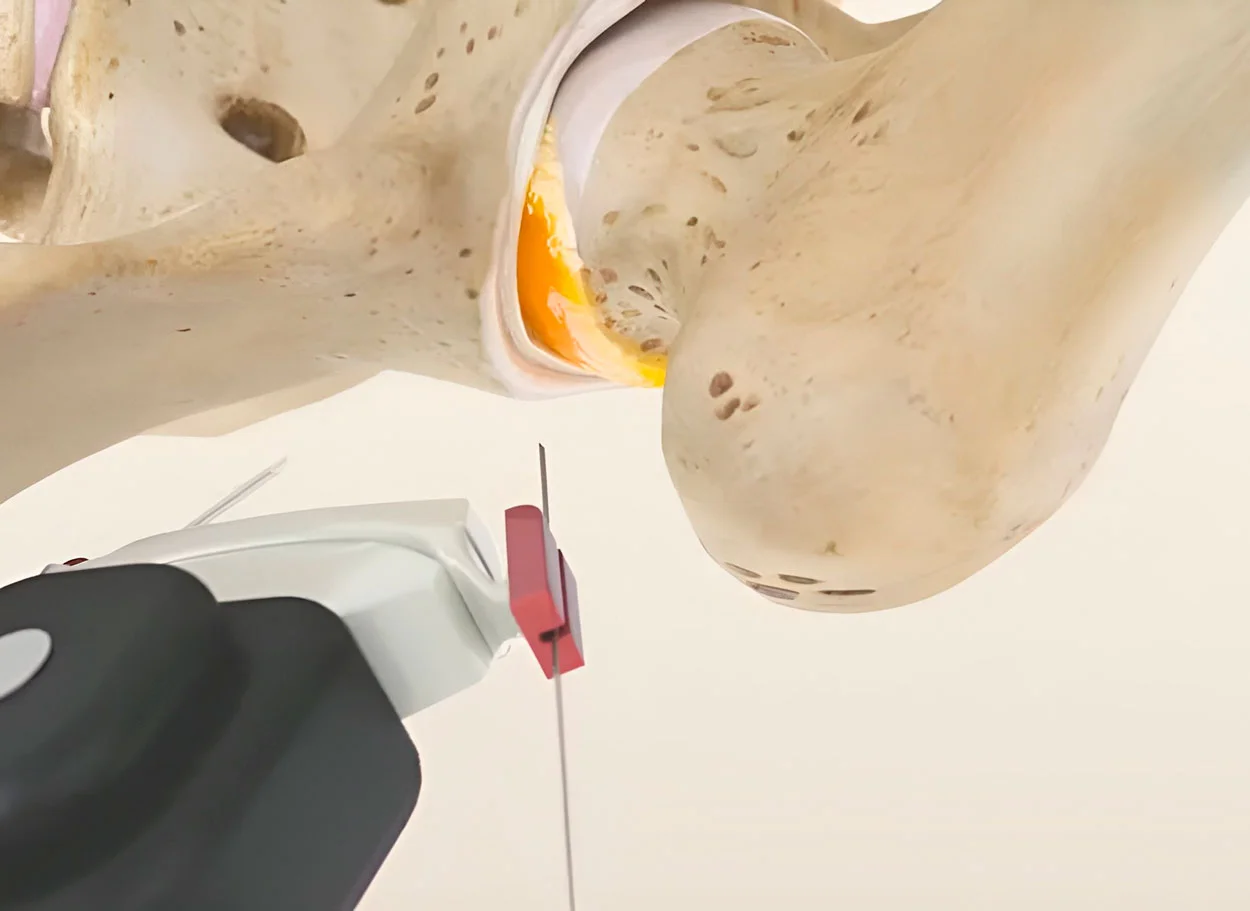
Intraoperative robotic navigation system. Provides precise access to deep structures with 1 mm and 1 degree accuracy.
Ultrasound guidance
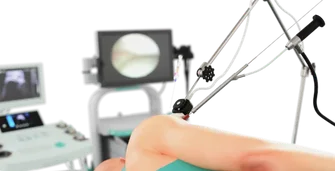
Device for intervention under sonographic control. Eliminates open surgeries with real-time visual monitoring.