
 Русский
  English
  Deutsch
  Español
  العربية
  中文
中文  Türkçe
  Français
  Italiano
What is Sciatica?
Sciatica (lumbosciatica, radiculopathy) is a pain syndrome caused by irritation or compression of the sciatic nerve or its roots (L4, L5, S1). The sciatic nerve is the longest and thickest nerve in the human body, running from the lumbar spine through the buttock and along the posterior surface of the leg to the foot.
Sciatica is not an independent disease, but a symptom of other spinal pathologies. According to statistics, up to 40% of the population experience at least one episode of sciatica in their lifetime.
Causes of Sciatica:
- Herniated Disc — the most common cause (60-90% of cases)
- Spinal Stenosis — narrowing of the canal with root compression
- Spondylolisthesis — vertebral slippage
- Piriformis Syndrome — muscle spasm compressing the nerve
- Osteophytes — bony outgrowths
- Spondyloarthrosis — facet joint osteoarthritis
Facts about Sciatica
- ICD-10: M54.3
- Prevalence: up to 40% of the population at least once in lifetime
- Peak: 30-50 years
- Main cause: herniated disc (60-90%)
- Recurrences: up to 50% of cases
Symptoms of Sciatica
Typical Presentation
- Sharp shooting pain from the lumbar spine into the leg
- Pain along the posterior/lateral thigh
- Pain in the calf and foot
- Worsening with coughing, sneezing, straining
- Antalgic posture
- Inability to sit or stand for long periods
Neurological Signs
- Numbness and tingling in the leg
- Sensation of «crawling ants»
- Foot drop weakness
- Reduced or absent reflexes
- Muscle atrophy (in prolonged cases)
⚠️ Seek Urgent Medical Attention
- Disruption of urination or defecation
- Numbness of the perineum (saddle anesthesia)
- Rapidly progressing weakness in the leg
- Bilateral Sciatica
- Pain not relieved by any medications
How regenerative treatment treats Sciatica
Regenerative treatment eliminates the cause of Sciatica, rather than masking the pain. Depending on the cause — herniated disc, stenosis, spondylolisthesis — treatment targets regeneration of the specific damaged structure.
Identifying the cause
Lumbar MRI is analyzed using Navigation system. The exact cause of nerve compression — herniated disc, stenosis, osteophytes — is precisely determined. A plan for micro-invasive access to the problem source is developed.
Obtaining regenerative concentrates
From blood — CGF with powerful anti-inflammatory and regenerative effects. From adipose tissue — MFAT with stem cells for restoring damaged tissues.
Targeted intervention
Concentrates are injected under navigational control directly into the problem source: into the damaged disc, around the compressed nerve, into the stenosis area. Anti-inflammatory factors quickly reduce swelling and pain.
Regeneration and decompression
Stem cells restore the damaged disc, reduce the herniation, and expand the effective canal lumen. The nerve is freed from compression through biological means, without surgical tissue removal.
Traditional Sciatica treatment vs regenerative treatment
| Criterion | Painkillers / blocks | Microdiscectomy | Regenerative treatment |
|---|---|---|---|
| Principle | Suppression of pain with medications | Surgical removal of herniation | Elimination of cause + regeneration |
| Cause eliminated? | ❌ No — only symptoms | Partially — herniation removed, but disc damaged | ✅ Yes — regeneration of disc and nerve decompression |
| Recurrence risk | High (up to 50%) | 15-25% (herniation recurrence) | Low (regeneration of structure) |
| Pain relief speed | Fast, but temporary | Immediately after surgery | Days — weeks (progressive effect) |
| Side effects | GI tract, kidneys, liver (with prolonged use) | Scarring, instability | Minimal — own cells |
Why regenerative treatment is effective for Sciatica
Sciatica is a symptom, not an independent disease. Traditional medicine fights the symptom (painkillers, blocks) or its direct cause — herniated disc (microdiscectomy). But none of these approaches restores the damaged disc. Regenerative treatment eliminates the cause and initiates regeneration simultaneously.
Triple action of regenerative treatment for Sciatica:
- Rapid pain relief — CGF and MFAT contain powerful anti-inflammatory cytokines (IL-1Ra, IL-10), which suppress inflammation around the compressed nerve. Swelling decreases, pressure on the nerve reduces — pain subsides in the first days
- Neuroprotection — nerve growth factors (NGF, BDNF) and vascular factors (VEGF) improve blood supply to the damaged nerve, restore its conductivity, and promote remyelination
- Regeneration of the cause — stem cells restore the damaged disc (in herniation), reduce ligament hypertrophy (in stenosis), strengthen the ligamentous apparatus (in spondylolisthesis) — eliminating the cause of nerve compression
As a result: pain goes away not because it is masked by medication, but because the nerve is freed from pressure and biologically restored. This is why recurrences after regenerative treatment are significantly less frequent than after blocks (up to 50%) or even surgery (15-25%).
Advantages of regenerative treatment for Sciatica
- Elimination of the cause — not pain masking
- Rapid relief — days, not weeks
- Progressive effect — improvement continues for months
- Low recurrence rate — structural regeneration
- No side effects of NSAIDs (GI tract, kidneys, liver)
- Comprehensive treatment — multiple causes at once
Regenerative method Advantages
A broad range of indications
Regenerative methods are used for many orthopaedic and spinal conditions. Some cases still call for surgery.
No anesthesia or incisions
Outpatient treatment via 0.3-1.5 mm puncture. No general anesthesia or hospitalization.
No age restrictions
Regeneration at any age. Safe for chronic conditions and anesthesia intolerance.
Rapid improvement
Concentrates have analgesic and anti-inflammatory properties. Relief within days.
Multiple zones at once
Simultaneous treatment of multiple discs or joints in one procedure.
Home the same day
No crutches, braces or rehabilitation needed. MRI follow-up at 8-16 weeks.
Regenerative treatment Technology

Navigation system
Intraoperative robotic navigation system. Provides precise access to deep structures with 1 mm and 1 degree accuracy.
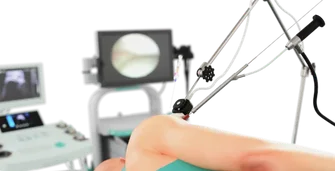
Ultrasound guidance
Device for intervention under sonographic control. Eliminates open surgeries with real-time visual monitoring.
Frequently Asked Questions about Sciatica Treatment

Clinic and method matching — free of charge
Describe your case and attach your MRI report. We will identify clinics that use the relevant methods and forward your request to them. No obligation; we reply within two working days.
Send a request