
 Русский
  English
  Deutsch
  Español
  العربية
  中文
中文  Türkçe
  Français
  Italiano
What is PRP Rejuvenation
PRP (Platelet-Rich Plasma) — platelet-rich plasma obtained from the patient's own blood. Platelets contain more than 30 growth factors that trigger skin regeneration processes:
- PDGF — stimulates cell division and angiogenesis
- TGF-β — activates collagen and elastin synthesis
- VEGF — improves microcirculation and tissue nutrition
- EGF — accelerates epidermal renewal
With regenerative methods, an advanced CGF (Concentrated Growth Factors) technology is used — concentrated growth factors. This is next-generation PRP: platelet concentration is 5-8 times higher than standard PRP, and the fibrin matrix ensures gradual release of growth factors over 7-10 days.
Indications for PRP Rejuvenation
Age-Related Changes
- Fine and medium wrinkles on the face and neck
- Reduced skin turgor and elasticity
- Dull complexion, uneven tone
- Enlarged pores
- "Tired" skin appearance
Skin Imperfections
- Post-acne — atrophic scars
- Pigmentation and photoaging
- Dark circles under the eyes
- Dehydrated skin
- Recovery after laser/peeling
How the Procedure is Performed
Blood Draw
20-40 ml of blood is drawn from a vein into special tubes.
Centrifugation
Blood is centrifuged using the CGF protocol — resulting in a concentrate with 5-8× platelet levels.
Injections
PRP/CGF is administered via microinjections into problem areas of the face, neck, and décolleté. Duration: 30-40 minutes.
Result
First effect in 2-3 weeks. Maximum — in 2-3 months. Duration — 12-18 months.
PRP vs fillers and Botox
| Criterion | PRP/CGF | Hyaluronic fillers | Botox |
|---|---|---|---|
| Composition | Own plasma | Synthetic HA | Botulinum toxin |
| Mechanism | Tissue regeneration | Volume filling | Muscle blocking |
| Allergy | Impossible | Possible | Possible |
| Naturalness | Maximum | Risk of "doll face" | Mask-like appearance |
| Duration | 12-18 mo. | 6-12 mo. | 3-6 mo. |
| Deep regeneration | Yes (collagen, elastin) | No | No |
Regenerative method Advantages
A broad range of indications
Regenerative methods are used for many orthopaedic and spinal conditions. Some cases still call for surgery.
No anesthesia or incisions
Outpatient treatment via 0.3-1.5 mm puncture. No general anesthesia or hospitalization.
No age restrictions
Regeneration at any age. Safe for chronic conditions and anesthesia intolerance.
Rapid improvement
Concentrates have analgesic and anti-inflammatory properties. Relief within days.
Multiple zones at once
Simultaneous treatment of multiple discs or joints in one procedure.
Home the same day
No crutches, braces or rehabilitation needed. MRI follow-up at 8-16 weeks.
Regenerative treatment Technology

Navigation system
Intraoperative robotic navigation system. Provides precise access to deep structures with 1 mm and 1 degree accuracy.
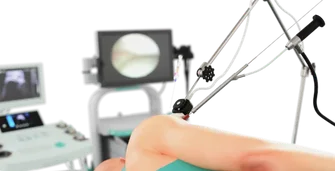
Ultrasound guidance
Device for intervention under sonographic control. Eliminates open surgeries with real-time visual monitoring.
Frequently asked questions about PRP rejuvenation
Other aesthetic medicine procedures
Clinic and method matching — free of charge
Describe your case and attach your MRI report. We will identify clinics that use the relevant methods and forward your request to them. No obligation; we reply within two working days.
Send a request