
 Русский
  English
  Deutsch
  Español
  العربية
  中文
中文  Türkçe
  Français
  Italiano
Scars
Atrophic Scars
- Post-acne — ice pick, boxcar, rolling scars
- Stretch Marks (Striae) — on abdomen, thighs, breasts
- Postoperative — depressed, thin scars
Stem cells fill the defect with new collagen and restore the normal dermal architecture.
Hypertrophic and Keloid
- Hypertrophic — raised, dense scars
- Keloid — growing beyond the wound boundaries
- Contracture — tightening, restricting movement
Growth factors remodel excess collagen, restoring the normal ratio of collagen types I and III.
How regenerative treatment Remodels Scars
Scar tissue differs from normal skin: collagen fiber architecture is disrupted, hair follicles and sebaceous glands are absent, and microcirculation is impaired.
Regenerative treatment acts on the scar comprehensively:
Destruction of Pathological Collagen
Matrix metalloproteinases from stem cells break down disorganized collagen fibers in the scar.
Neovascularization
VEGF and angiopoietin restore microcirculation in the scar area — the skin receives nutrition.
Synthesis of New Collagen
TGF-β3 directs the synthesis of collagen type III (as in normal skin) instead of pathological collagen type I.
Restoration of Structure
After 3-6 months, the scar becomes softer, thinner, and closer in color and texture to the surrounding skin.
Regenerative treatment vs Laser and Other Methods
| Criterion | Regenerative treatment (stem cells) | Fractional Laser | Corticosteroids |
|---|---|---|---|
| Mechanism | Tissue regeneration | Thermal damage → healing | Inflammation suppression |
| Downtime | 1-2 days | 7-14 days | 0 days |
| Risk of pigmentation | None | High (dark skin) | Possible |
| Scar types | All types | Atrophic | Hypertrophic |
| Number of sessions | 2-4 | 4-8 | 3-6 |
| Deep remodeling | Yes | Superficial | No |
Regenerative method Advantages
A broad range of indications
Regenerative methods are used for many orthopaedic and spinal conditions. Some cases still call for surgery.
No anesthesia or incisions
Outpatient treatment via 0.3-1.5 mm puncture. No general anesthesia or hospitalization.
No age restrictions
Regeneration at any age. Safe for chronic conditions and anesthesia intolerance.
Rapid improvement
Concentrates have analgesic and anti-inflammatory properties. Relief within days.
Multiple zones at once
Simultaneous treatment of multiple discs or joints in one procedure.
Home the same day
No crutches, braces or rehabilitation needed. MRI follow-up at 8-16 weeks.
Regenerative treatment Technology

Navigation system
Intraoperative robotic navigation system. Provides precise access to deep structures with 1 mm and 1 degree accuracy.
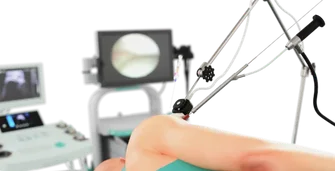
Ultrasound guidance
Device for intervention under sonographic control. Eliminates open surgeries with real-time visual monitoring.
Frequently Asked Questions about scar treatment
Other aesthetic medicine procedures
Clinic and method matching — free of charge
Describe your case and attach your MRI report. We will identify clinics that use the relevant methods and forward your request to them. No obligation; we reply within two working days.
Send a request